
Share Jerome W. Page's obituary with others.
Invite friends and family to read the obituary and add memories.
Stay updated
We'll notify you when service details or new memories are added.
You're now following this obituary
We'll email you when there are updates.
Select your format and elements to print

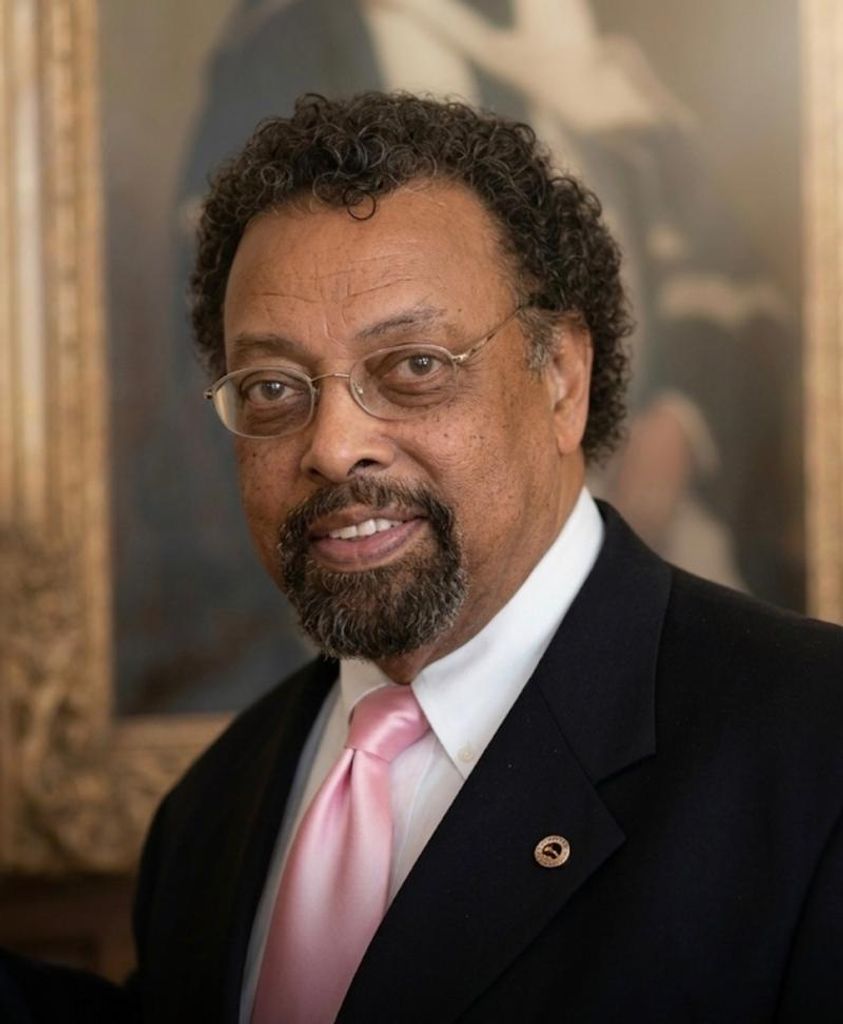
Jerome W. Page
Mar 6, 1935 — Feb 8, 2026
Denver



Jerome W. Page
Today, March 6th of 2026, on what would have been his 91st birthday, we recognize Jerome Whittington Page, who passed away from dementia-related decline on February 8th, 2026, just hours after he was anointed and Commended to God with prayer in the company of relatives and friends, his wife, sons, grandchildren and great-granddaughter.
Jerome was born on March 6, 1935, in Denver, Colorado, the middle son of Brittania Yardley Whittington Page, a nurse, and Daniel Page, who operated the largest Black-owned electrician company in Colorado. He grew up alongside his two brothers: Daniel Lawrence Page, an accountant who later passed away in Detroit in 2009, and David Charles Page, who carried on the family electrician business until his passing in 2017.
Jerome was preceded in death by his eldest child, Leslye Lynne Mundy, who passed away in Portland, Oregon, in 2003.
He is survived by his wife of 54 years, JoKatherine Holliman Page of Denver; his eldest son, Hank Lewis of Golden, Colorado; and his youngest son, Jason Page, his wife Maggie Samways, and their daughters Nora and Winnie, who live in London, United Kingdom.
He is also survived by his daughter's widower, Marcus C. Mundy of Portland, Oregon, and their three children: Taylor Cheek-Mundy and her husband, Dr. Josh Burkholder, of Cleveland, Ohio; Dieudonne Mundy of Portland, Oregon; and Will Mundy and his partner Khadija Smith, along with their daughter Ardessi of Eugene, Oregon, Jerome's great-granddaughter.
Jerome is further survived by his extended family, including his niece Théda Page and her husband Julian Brice of Frisco, Texas, daughter of his brother Daniel; and the children of his brother David: Najla Page Hamilton and her husband Kennith Hamilton of Los Angeles, California; Miya Page Scott and her husband Peter Scott of Laurel, Maryland; and Gabriel Page of Wheaton, Maryland. He also leaves Miya's children—Niya John, Elijah John, Glory John, and Lena Scott—who continue the family's growing legacy.
A celebration of Jerome's life, together with the interment of his ashes, will take place at the Church of the Holy Redeemer, in Denver in late July 2026. Details will be shared at a later date.
A LIFE AND LEGACY OF SERVICE
With his passing, Colorado, the United States, and communities abroad lost a champion of civil rights, nonviolent protest, and faith-centered inclusion of all God's children. A leader in national and city civil rights organizations since the 1960s, Jerome's career stretched from being among the first of America's Peace Corps cohorts to deploy across developing nations, through more than thirty years as an Urban League CEO in Seattle, Washington, DC, Chattanooga, and Colorado Springs, and into a retirement that saw him founding the Denver Minority Opportunity Fund and serving with FEMA in the wake of some of the country's worst disasters, from New Orleans to Puerto Rico.
From his Cold War service in the Army as an intelligence analyst stationed in Turkey to his mentorship of countless social workers and political leaders, Jerome Page stands as a model for a life of service lived to the fullest. Whether he walked the paths of power with the likes of John Lewis, Andrew Young, Jesse Jackson, and Vernon Jordan, or stepped from his office to an Urban League day-care center he founded to play with the children of unemployed mothers taking classes next door, the mighty and the meek alike knew him as a servant, mentor, leader, and friend.
After a record-setting career as a letterman for Colorado A & M, he served in the U.S. Army, stationed in Sinop, Turkey, "listening to the Russians," as he liked to quip. He later recalled this period as the beginning of a lifetime of international adventure.
Among the stories he told were being rescued by fishermen when the boat he rented lost power off the coast of Sinop, and discovering a sand- and salt-encrusted Ottoman army-issue pistol while snorkeling in the Mediterranean.
After mustering out of the Army, he became the first Black American from Colorado to enter the Peace Corps. He was deployed to Caracas, Venezuela, where he hosted Vice President Hubert Humphrey on tours of the YMCA programs he ran for the city's youth.
His early life of service carried him through Europe, the Middle East, and Latin America, and he returned home with Oktoberfest beer steins, Middle Eastern silks, Chinese black tea, Japanese kimonos, and, above all, a deeper appreciation for the complexity of cultures.
During the turbulent 1960s, after already serving his country in both the Army and the Peace Corps, he joined the Denver Urban League, mentored by Sebastian Owens. There began what would become his greatest contribution to his community and country: more than thirty years with the National Urban League, most of them spent as Executive Director of branches in four cities across four American regions.
Over that decades-long journey, he worked alongside many of the nation's most influential leaders and politicians, building networks of opportunity, equity, and cultural uplift across communities. His programming ranged widely: Black art exhibitions, community 5K runs, fair-housing initiatives, and partnerships between disparate social groups, as well as job advancement and child development opportunities for the underserved and forgotten.
After retiring from the Urban League in the mid-1990s, he hardly slowed down. When he wasn't deploying with FEMA for months at a time to the sites of some of the nation's worst disasters, he could be found moving around Denver, boosting the prospects of students, volunteers, and young professionals by handing them checks from the Denver Minority Opportunity Fund—his own nonprofit brainchild, supported by contributions from local private businesses.
His leadership and commitment to community continued well into later life. Into his late 80s, he led faith-based social justice reading groups, and at the ripe old age of 89 he was elected to the Leadership Council at City Park Nursing Home.
To his last day, his personal compass for righteousness pointed to the lodestar of social justice, so much so that his family life and professional life bear a legacy that continues to guide the many kin who continue to navigate the waters he first charted:
-His wife JoKatherine, a social worker with whom he partnered on many an initiative, former Citizen's Advocate for the Tennessee Valley Authority, and whose career as graduate professor of social work, executive with the Washington, D.C., YWCA and Girls Clubs of Chattanooga have blazed the trail for countless women and social workers.
-His youngest son, Jason, who has been a culture-curator and social-justice organizer whose programming and thought-provoking salon series engages communities in the US and UK
-His eldest son, Hank, who teaches weekly writing classes to homeless veterans
-His daughter, Leslye Mundy, whose work spanned from meeting the needs of the unhoused to contributing a Black woman's poise and professionalism in the highest corporate levels of the Wall Street Journal, Enterprise, and Nike.
-Leslye's children,
- Taylor Cheek-Mundy, whose work has guided corporate entities to better serve all citizens
-Dieudonne Mundy, program manager and advocate for underserved communities
-William Hugues Mundy, an aspiring coach who has trained as a law-enforcement officer focused on community-centered engagement
-Leslye's widower, Marcus C. Mundy, who has made a name for himself as a vocal and trusted leader of vital community organizations in Portland, OR.
GROWING UP
Born in Denver's Whittier neighborhood to Britt and Dan Page, Jerome was baptized at the People's Presbyterian Church of Denver, where he became a youth leader and remained a devout Christian to his last day. He grew up at a time when Black people were prevented from buying property east of York Street, and he had to fake his street address in order to attend one of the nation's finest public schools, East High School, also located east of York.
While Jerome surely felt the racial imbalances of a Denver marked by Jim Crow politics and redlining tactics, he also witnessed the socioeconomic vibrancy of Black Denver all around him. He saw the bustle around his friend LeRoy Smith's father's storefront in Five Points—"the Harlem of the West"—and watched his father's electrician business grow from one truck into a squad of vans advertising one of the region's most successful Black-owned companies with the catchphrase: "There goes Dan, the Electric Man!"
Like many hardworking tradesmen, Dan provided his family with a life that helped form the foundation of middle-class Black Denver. Still, Jerome remembered growing up with modest resources. He joked that "we were so poor our name couldn't be Paige, because we couldn't afford that extra 'i.'" When his children complained about hand-me-down clothes, he told stories of how he and his brother had to share a coat so his children might be more grateful for what they had.
Though a church youth leader, strong student, and star track athlete at East, teenage Jerome also ran with a group of young men who called themselves the Parasites. Some thought they were a gang, but Jerome and his friends were quick to reassure the girls they liked—and any questioning parents—"We're not a gang, we're a club!" Though he could not yet know the impact of such a crew, he understood early the power of brotherhood and community.
A great man surrounds himself with great men, and Jerome Page was a collector and connector of them. Many came from the ranks of his childhood friends: Buzzy Benson, Warnie Scott, Ottawa Harris, Lee Smith, and Carl Pigord—men well known throughout Denver and familiar to the family. Their presence around his sons offered living examples of how to move through the world, so that when Jerome told Jason and Hank, "You can go anywhere you want in this world," they had already seen brothers who embodied that truth.
A successful man surrounds himself with successful women, and Jerome made sure his daughter Leslye grew up among models of strength, kindness, determination, and the adaptability of Black women. He included her in gatherings with the remarkable women in his life and made sure she recognized not only the example of her mother, JoKatherine—a networking and community-organizing savant—but also her mother's remarkable circle of friends, a Talented Tenth in their own right. Among them were Carlotta Lanier, one of the Little Rock Nine; former State Representative Rosemary Marshall; and her godmother Jane Waller Pigford, a legend in Denver elementary and secondary education.
Jerome also empowered his daughter through his own actions. When Leslye was fifteen, he arranged for her to fly alone to the National Urban League Convention in San Francisco. The experience strengthened her sense of independence and sparked the can-do spirit that later helped carry her into the highest boardrooms of Nike.
KEEPING IT REAL, KEEPING IT LOCAL
Jerome Page had a decorum of kindness. He had a way of being that was gentle and welcoming, balanced with dry humour and still-water resolve. Whether at a community event, board meeting, convention, protest march, or gathering, he engaged people warmly, sharing both laughter and consolation. This ease and empathy shaped his work as a community leader and endeared him to those he served.
His leadership was guided by principles instilled in him early by his mentor, Sebastian Owens, during his first years with the Urban League. One key principle was that a leader in a community‑based organization should serve the community for its own sake—not use that role as a stepping stone to public office, where ambitions can compromise commitment to the people. Though Jerome led Urban League affiliates with national profiles, he never lost touch with the grassroots. He remained rooted in the neighborhoods he served, carrying the lessons of service from one community to the next across the United States.
After leading the Urban League in Washington, D.C., rather than pursue positions of higher visibility within the national organization, he chose instead to bring his experience to Chattanooga, where his locally centered leadership was needed. Unlike some nonprofit leaders who pivot into political campaigns or align with developers whose projects erase Black communities, Jerome stayed in the streets, with the people, and for the people—keeping it local and relational.
For every Black and Brown person displaced or erased in the wake of power-seeking politicians, there will be everyday people who will feel how Jerome Page touched their lives: There are old folks in Venezuela who will remember Jerome Page teaching them baseball in the 1960s. There will be Black folks who started their wellness journey in the 1980s because of DC Home Town Run, embodied by the bright red t-shirts still circulating the globe. There are young adults in Colorado Springs, who played in his Child Development Center while their mothers gained needed skills for jobs to improve their lives. There are college graduates who can remember Jerome Page walking up to their door with a check that helped them with books or a computer. There are survivors of Hurricane Katrina who can thank the advocacy he provided them so they received the same relief benefits as everyone else. There are East High School students who will open books in their library and notice they are a part of a massive collection of African American literature donated by Jerome and his wife, JoKatherine, to their alma mater.
THE PERSON INSIDE THE LEADER
To those who knew him more deeply than what his public life projected, he was Brother Page, Jerome, Jerry, Dad, Grandfather. He was a man whose fierce calm and sharp wit warmed up rooms with a big-toothed smile, a warm embrace, always a kiss on the cheek— be you daughter or son —and armed with more and had his grandchildren's eyes rolling with Grandfather-jokes long before dad-jokes got hip.
Much of how Jerome loved his family could be witnessed in the weekend activities with his children and wife: he loved making pancakes for his family on the weekends, making his Sunday ritual into a family tradition: him, making breakfast in the kitchen in a robe, then sitting down to read the newspaper with his children. In this way, he instilled early habits of reading, information-gathering, all from a platform of family fun, as he first educated his kids in the funny papers of the Seattle Intelligencer, voicing characters from Archie to Prince Valiant. His son, Jason remembers fondly these moments and now carries, clad in his own pajamas, stirs up pancakes, comics, and community-making activities with his daughters. On Sunday afternoons, Jerome's children would watch him delve into more serious print, from the New York Times, to Black Enterprise, Crisis, and even the conservative-leaning New Republic, setting an example that one should educate themselves with all views. On Sunday evenings, it became normal for his kids to watch 60 Minutes, the Tony Brown's Black Journal, and The McLaughlin Group, a quick-fire moderate-leaning show that reflected his even-handed approach to learning all perspectives in order to find ways to build community with all peoples
He spread his love, warmth, and dad-jokes before it was a thing to his daughter, Leslye's, kids and Jason's, all of whom called him Grandfather. And Grandfather saw this generation of grandchildren grow through school performances and games, to connecting with them as young adults, on the shores of Martha's Vineyard, to the cobblestones of Lewisham, London. He was equally eager guide and visitor to the cultural spots important to Black people, and always, always, a fun and educational day with Grandfather was capped off with ice cream!
There are so many small slices that show us the measure of the man in his family life, but here are a few:
-At a time when few men might have done so, Jerome was a stand-up family man. He proposed to JoKatherine, a single mother of two, and together they raised a third child. His humor and love often appeared in the same gesture. For what should have been a landmark anniversary, he casually handed her a teddy bear—seemingly modest for ten years of marriage. JoKatherine may have been slightly disappointed until she gripped the bear and discovered, tucked inside its zippered belly, a sparkling ring to commemorate their union.
-When the family first moved to Seattle and Leslye complained about the rain, Jerome would take her to the top of Smith Tower, once the city's tallest building. After joking that the tower was "the box the Space Needle came in," he would seat her at his office desk, looking out at sheets of rain over the harbor, and brighten her day with his glass-half-full: "The rain is liquid sunshine!"
-He took his son Hank on camping and fishing trips across the state. When Hank was injured in a late-spring ice-avalanche during a Boy Scouts outing in the Cascades, Jerome was by his side, keeping him calm. "Always prepared," he helped lash together a stretcher with other dads and scouts, all while joking and distracting his son from the seriousness of the injury.
-There is a picture somewhere of Jerome at his desk—always cluttered with the work of community leadership—and beneath it, his infant son Jason. Jason, now a community leader himself, recalls that from a young age, his father always greeted him with a kiss on the cheek. In a world where Black men are too often not portrayed as caring, loving fathers, that simple gesture reassured him of his father's true love. That kiss, repeated from childhood to their last moments together, stands as a testament not only to Jerome's devotion to family but to the genuine, unembarrassed love he shared with everyone in his life.
HIS RACE IS RUN, BUT NOT DONE…
There are many images and quotables we hope family and friends will post to an upcoming FaceBook and tribute website for Jerome page, but we will close this tribute with favorite quotes of his, and one image that guided his mission as a leader, father, and man.
For as long as anyone can remember, in every office Jerome Page ever occupied, there was a large print of Don Quixote, the embodiment of taking on challenging causes, and the hero of the popular stage show and movie Man of LaMancha, from which Jerome used to sing the to his children that show's most famous song, "The Impossible Dream." We will always remember him as a man who fought to for any of us, all of us, to dream the impossible into reality.
One of Jerome's last adventures was not to joust windmills, as his hero Don Quixote might have done, but was in a helicopter ride, a lifetime dream fulfilled by the Make-a-Wish Foundation. For a man who had faced the world's ills and evils "to right the unrightable wrong," he still held new joy in his old face, fascinated with mountains and valleys of his home state, and the country spilling off the shoulders of the Great Divide. One could imagine the mountains and valleys he traversed to bridge this country's great cultural divides, and we should remember him there, aloft in spirit, fascinated by life, dedicated to people's capacity for good, ever hopeful, ever vigilant, and dreaming impossible dreams for the next generation to enjoy. And though he could not have known it then, he experienced a preview of his eternal rest and joy, knowing "...that I'll only be true to this glorious quest. That my heart will be peaceful and calm when I'm laid to rest."
PROFESSIONAL HIGHLIGHTS
-Bachelors Degree, Colorado A & M (now Colorado State), 1958
-From 1958-1961, Served in U.S. Army in Turkey during the Cold War as an intelligence analyst, listening to Soviet transmissions
-In 1962, was the Black American from Colorado in the Peace Corps, and among first Peace Corps Volunteers to deploy anywhere in the world.
-During his Peace Corps assignment in Caracas, Venezuela, he hosted Vice-President Hubert Humphrey at his work with kids in the city's YMCA system.
-Was honored in 2021 at the opening of Peace Corps Garden at Colorado State University, the first American college to deploy Peace Corps volunteers
-Masters Degree, School of Social Work, University of Denver, 1967
-Urban League executive for more than three decades, starting in Seattle in 1968, when he replaced Edwin Pratt, who was assassinated by White supremacists, and capping off a career in Colorado Springs in the mid-1990s, founding the Urban League Child Development Center, a career center for working mothers with an adjacent daycare center for their children.
-Seattle Urban League, 1968-1979
-Stood on the runway of SeaTac airport in solidarity with airport employees protesting for fair practices
-With his wife, JoKatherine Holliman Page, co-founded the first art exhibition of Black Artists, local and internationally known, including Jacob Lawrence and Gwendolyn Knight
-Washington, D.C. Urban League, 1979-1983
-Founded Home Town Run, a 5K race though in DC, the first of its kind to run through inner DC.
-Arrested at the South African Embassy in DC in protest of apartheid system in South Africa apartheid
-Founded first art show prominent Black artists for the National Urban League (NUL) Annual Conference
-Met President Jimmy Carter at White House
- Chattanooga Urban League, 1983-1992
-Tapped by NUL President Verdon Jordan to invigorate much needed cross-cultural and socio-economic partnerships
-Founding board member for the Chattanooga School of Arts and Sciences, in a time before charter-schools and discipline-specific public schools
-Colorado Springs Urban League, 1992-2000
-Fostered partnerships across disparate social and political groups in Colorado Springs, including connecting representatives from the LGBTQ community to the conservative-leaning Focus on the Family community
-Developed a career center for working mothers and an adjacent daycare center for their children
-10 years as Civil Rights officer for FEMA at disaster sites, including New Orleans and Puerto Rico for several months after devastating hurricanes and flooding
-NAACP, lifetime member
-Alpha Phi Alpha Fraternity, lifetime member
-last chapter - Delta Psi Lamda Chapter - Denver
-Boulé, Member for 20+ years
-Seattle
-Washington, DC
-Chattanooga, TN (Founding member)
-Denver, CO
-Denver Black Reparations Council, Founding Board member
-Black Opportunity Community Fund in Denver, Founder and Administrator
-National Urban League's Academy of Fellows, Inductee
-Colorado ACLU Whitehead Award, 2001
-M.L. Chase Memorial Humanitarian Award, Colorado Springs, CO, 1999
-Outstanding Citizen Award, The Municipal League of Seattle and King County, 1979
-Recognition for Outstanding Contribution to White House Conference on Small Business, 1979
Guestbook
Visits: 277
This site is protected by reCAPTCHA and the
Google Privacy Policy and Terms of Service apply.
Service map data © OpenStreetMap contributors
